
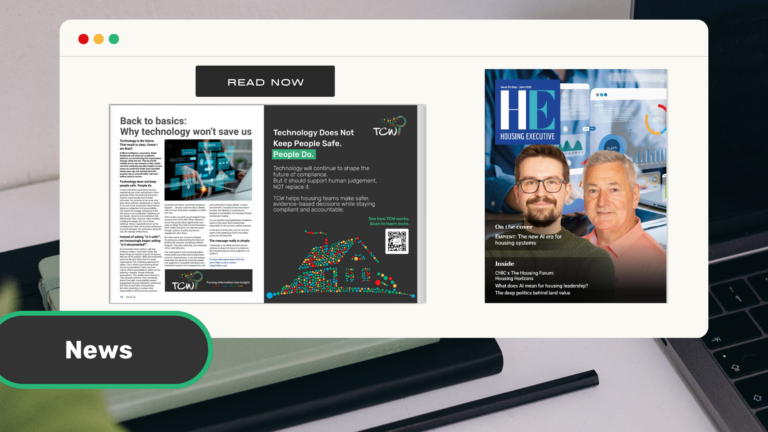
Technology is the future. That much is clear, I know I am bias!!
Artificial intelligence, automation, digital dashboards and advanced compliance platforms are
transforming how organisations manage safety and risk. They do provide visibility across vast
amounts of data, enable real-time monitoring and allow leaders to track issues at a scale that
simply wasn’t possible twenty years ago, but, beneath all of this progress sits an uncomfortable
truth that I believe needs to surface.
Technology does not keep people safe. People do.
In many industries, particularly housing, engineering and asset management, we’ve gradually
drifted into believing that better systems automatically lead to better outcomes. Yet compliance
has never truly been about software, dashboards or reports. At its core, it has always been about
human behaviour, judgement and accountability. The reason we manage compliance in the first
place is not complicated. Buildings can hurt people. Systems and installations fail. Maintenance
slips. Humans make mistakes, including the people who live in those buildings. History repeatedly
shows us the consequences when risk is poorly understood or poorly managed. Yet somewhere
along the way, the industry shifted focus.
Instead of asking “Is it safe?”, we increasingly began asking “Is it documented?”.
Documentation does matters, I get that. Evidence matters. Audit trails matter. But these things are
outputs of good compliance, they are not its purpose. When documentation becomes the goal
rather than the result, organisations risk mistaking paperwork for safety. This is where
understanding things like the Accountability Theory becomes critical.
When responsibility is clearly owned, behaviour changes. People challenge assumptions. They
double-check decisions. They escalate concerns when something doesn’t feel right.
Accountability creates engagement because individuals understand that their actions have
consequences.
But when ownership is unclear, when responsibility is diffused across systems, processes and
teams, something dangerous happens. People assume someone else is dealing with the issue.
Remember, ambiguity is where risk lives.
There is also a powerful psychological factor at play known as the IKEA Effect. Research shows
that people place significantly more value on things they help to build themselves. When safety
processes are imposed purely through systems or policy documents, engagement often drops.
But when teams are involved in shaping the processes, understanding the risks and building the
solutions, something different happens. They take ownership, and ownership drives safer
behaviour.
The organisations that consistently deliver strong safety outcomes tend to share three common
characteristics, in my view anyway… leadership that genuinely prioritises people over paperwork,
competent individuals who understand systems and consequences, and clear ownership of
responsibility. In those environments, compliance becomes almost invisible. Not because it is
ignored, but because it is embedded into everyday thinking and decision-making.
You can have the most sophisticated compliance system in the world. But if nobody feels
responsible for the outcome, nothing improves.
At the time of writing this, over the next two weeks I’ll be speaking at ASCP Live events across
the UK about this.
The message really is simple.Technology is incredibly powerful and will continue to shape the future of compliance. But it
should support human judgement, not replace it.