
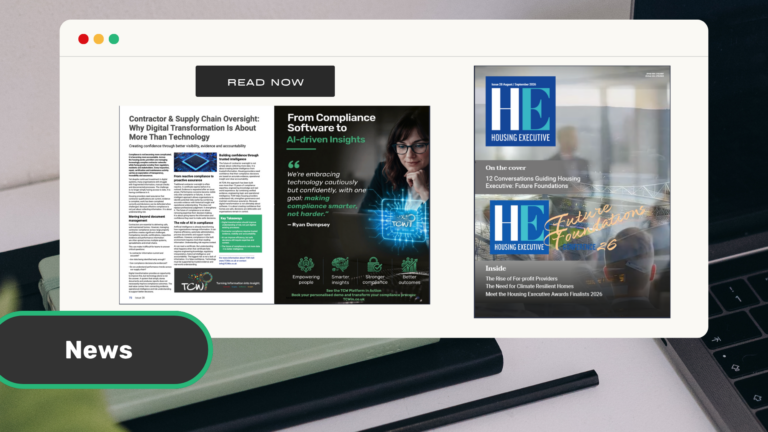
Creating confidence through better visibility, evidence and accountability.
Compliance is not becoming more complicated; it is becoming more accountable. Across the housing sector, providers are managing increasingly complex contractor networks while facing greater scrutiny from regulators, residents and stakeholders. Every inspection, repair, certification and maintenance activity carries an expectation of transparency, traceability and assurance.
Yet despite continued investment in digital systems, many organisations still struggle with fragmented information, manual checks and disconnected processes. The challenge is no longer simply having access to data. It is having confidence in it.
Housing providers need assurance that contractor qualifications are current, evidence is complete, work has been completed correctly and decisions can be defended when challenged.Because effective compliance is not just about collecting information. It is about understanding risk.
Moving beyond document management
Contractors are essential to delivering safe, well-maintained homes. However, managing contractor compliance across large property portfolios creates significant challenges. Competency records, certifications, inspection evidence and performance information are often spread across multiple systems, spreadsheets and email chains.
This can make it difficult for teams to answer critical questions:
• Is contractor information current and accurate?
• Are risks being identified early enough?
• Can compliance decisions be evidenced?
• Do we understand performance trends across our supply chain?
Digital transformation provides an opportunity to improve this, but technology alone is not the answer.
A system that simply stores documents and produces reports does not necessarily improve compliance outcomes. The real value comes from connecting evidence, operational intelligence and risk understanding to support better decisions.
From reactive compliance to proactive assurance
Traditional contractor oversight is often reactive.
A certificate expires before it is noticed.
Evidence is requested after an issue arises.
Performance concerns become visible only after complaints or failures.
A more intelligent approach allows organisations to identify potential risks earlier by combining accurate evidence with historical insight and operational understanding.
This does not replace professional judgement. It strengthens it.
The future of compliance is not about removing expertise from decision-making. It is about giving teams the information and confidence they need to make safer decisions.
The role of AI in compliance
Artificial intelligence is already transforming how organisations manage information. It can
improve efficiency, automate administration, process documents and support routine workflows.
However, compliance in the built environment requires more than reading information. Understanding risk requires context. AI can read a certificate. But understanding what happens when that certificate fails requires engineering knowledge, regulatory interpretation, historical intelligence and accountability.
The biggest risk is not a lack of information. It is false confidence.
Technology must be supported by trusted evidence and real-world understanding.
Building confidence through trusted intelligence
The future of contractor oversight is not simply about collecting more data.
It is about creating better intelligence from trusted information.
Housing providers need confidence that their compliance decisions are based on accurate evidence, operational insight and clear accountability.
At TCW, this approach has been built over more than 13 years of compliance expertise, engineering knowledge and real-world experience.
By combining verified evidence, engineering logic and operational intelligence, TCW helps housing providers understand risk, strengthen governance and maintain continuous assurance.
Because digital transformation is not ultimately about software.
It is about creating confidence that homes are safe, decisions are defensible and organisations remain in control.
Key Takeaways
• Digital transformation should improve understanding of risk, not just digitise existing
processes.
• Contractor compliance requires trusted evidence, visibility and accountability.
• AI can improve efficiency, but safe decisions still require expertise and context.
• The future of compliance is not more data- it is better intelligence