In print
Turning Data Into Insight — Not Just Hindsight
What happens when housing providers connect compliance records across teams? A boiler-breakdown exercise shows how structured data can help spot patterns before failures occur.
20 June 2025 · 3 min read
In Print
As Featured in Housing Executive.
Issue 20 · May / June 2025 · Page 90

The argument
Turning Data Into Insight — Not Just Hindsight
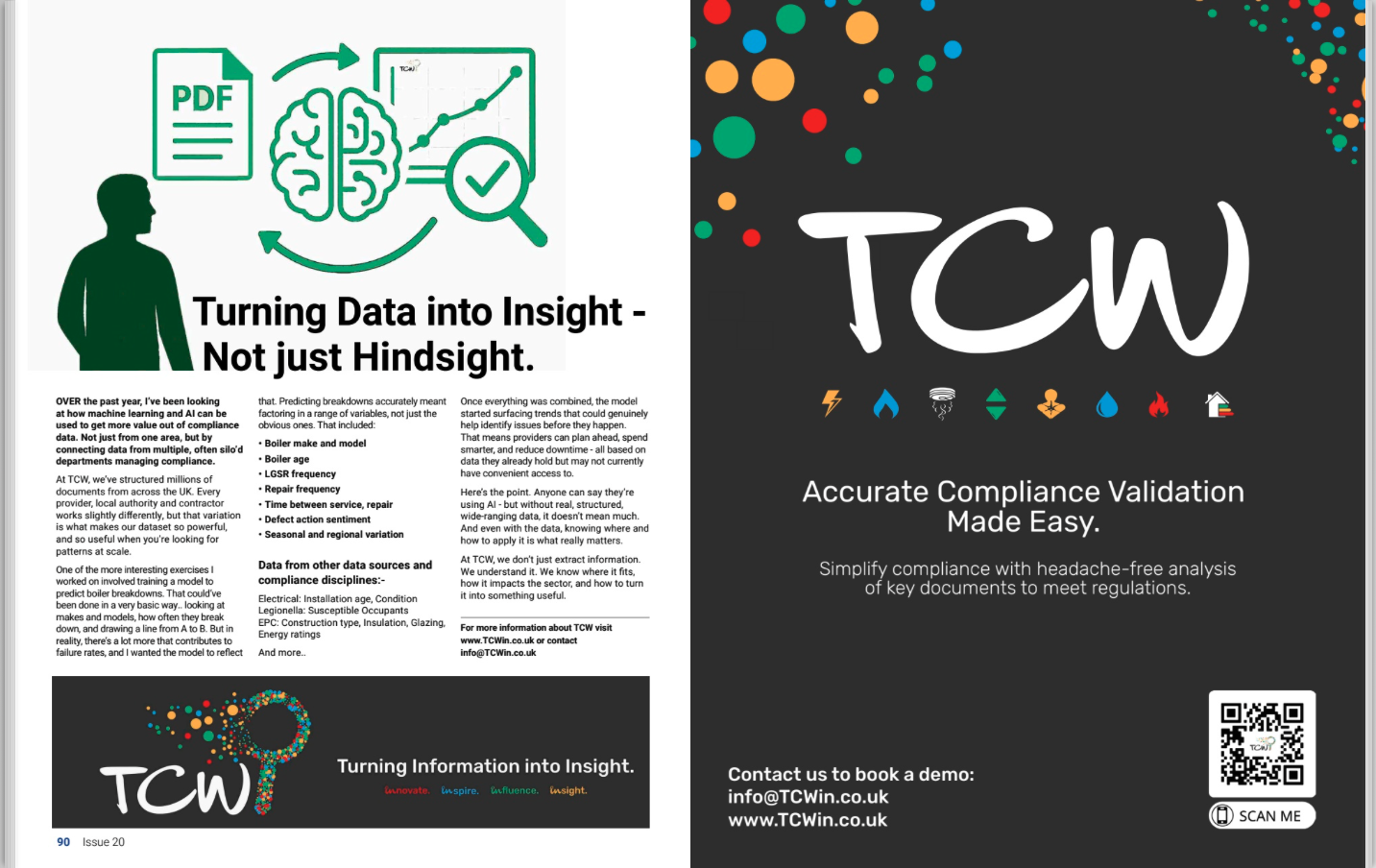
Over the past year, I’ve been looking at how machine learning and AI can be used to get more value out of compliance data.. Not just from one area, but by connecting data from multiple, often silo’d departments managing compliance.
At TCW, we’ve structured millions of documents from across the UK. Every provider, local authority and contractor works slightly differently, but that variation is what makes our dataset so powerful, and so useful when you’re looking for patterns at scale.
One of the more interesting exercises I worked on involved training a model to predict boiler breakdowns. That could’ve been done in a very basic way.. looking at makes and models, how often they break down, and drawing a line from A to B. But in reality, there’s a lot more that contributes to failure rates, and I wanted the model to reflect that. Predicting breakdowns accurately meant factoring in a range of variables, not just the obvious ones. That included:
- Boiler make and model - Boiler age - LGSR frequency - Repair frequency - Time between service, repair - Defect action sentiment - Seasonal and regional variation
Data from other data sources and compliance disciplines:-
Electrical: Installation age, Condition Legionella: Susceptible Occupants EPC: Construction type, Insulation, Glazing, Energy ratings
And more..
Once everything was combined, the model started surfacing trends that could genuinely help identify issues before they happen. That means providers can plan ahead, spend smarter, and reduce downtime - all based on data they already hold but may not currently have convenient access to.
Here’s the point. Anyone can say they’re using AI - but without real, structured, wide-ranging data, it doesn’t mean much. And even with the data, knowing where and how to apply it is what really matters.
At TCW, we don’t just extract information. We understand it. We know where it fits, how it impacts the sector, and how to turn it into something useful.
Questions this Article Answers
Questions This Article Answers.
Use This Insight
Use This Insight.
If you are reviewing your current systems, ask:
- Where are our compliance records siloed, and which sources could we connect?
- Are we considering service and repair history, defect actions and seasonal or regional variation alongside boiler details?
- Could electrical, legionella or EPC data add context to the risks we are trying to predict?
- How would we use emerging trends to plan ahead and reduce downtime?